Colophon
Field notes
This was the longest single project of the year. Six hours of integration across two consecutive nights — the kind of patience the Origin makes possible because you can leave it alone after setup and trust the live stacking.
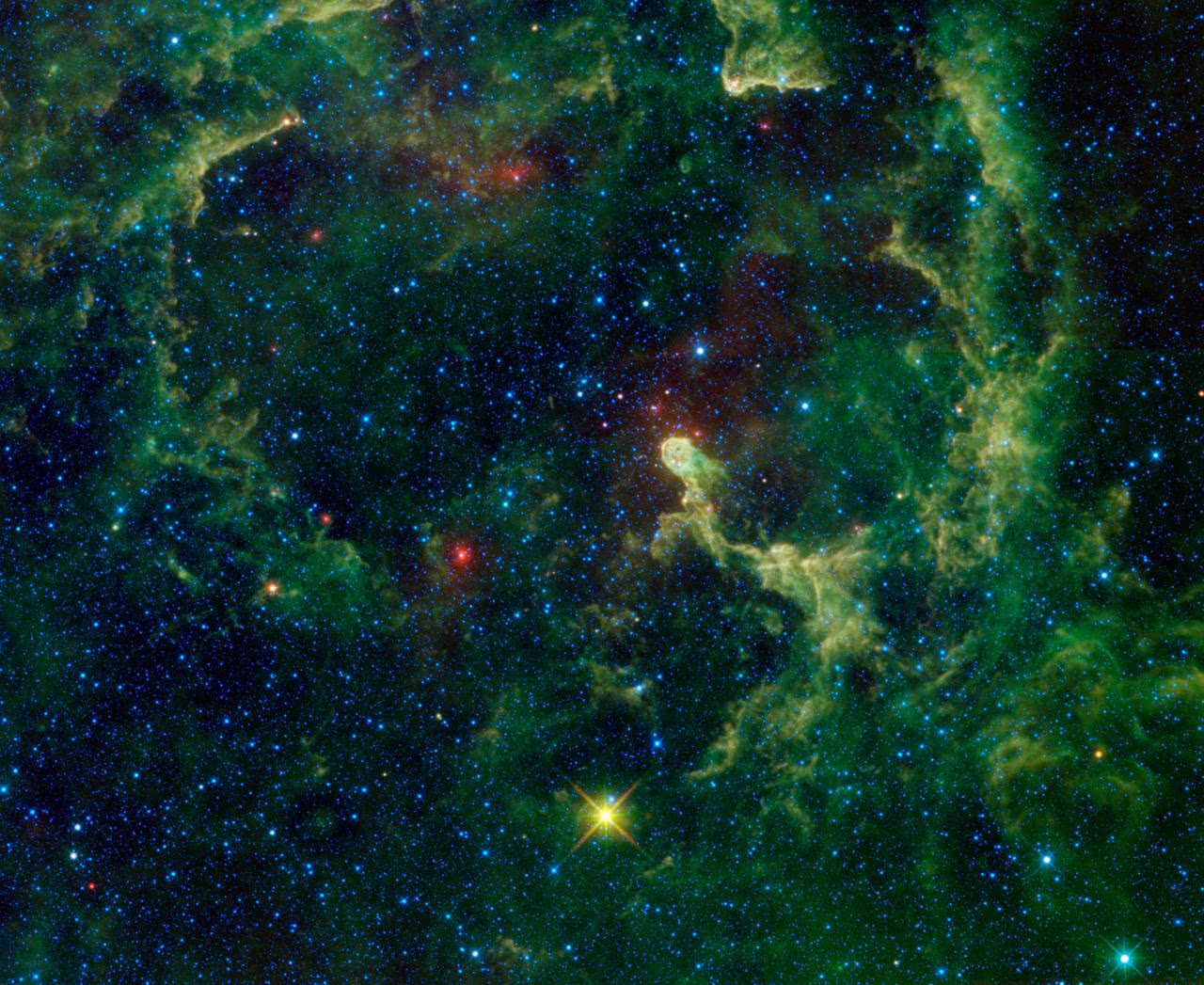
The Elephant’s Trunk is a dust pillar embedded in IC 1396, a much larger emission region in Cepheus. The trunk itself is the visually striking part, but what’s interesting is inside the trunk: bright young stars are still forming there, illuminating the gas from within and slowly pushing the dust apart.
Star formation, frozen mid-collapse.
The processing problem is that the trunk is dark — it’s an obscuring dust column silhouetted against the brighter ionized hydrogen behind. Most tutorials want you to “bring up the shadows” to recover detail. Here, the shadows are the subject. I deliberately kept the trunk darker than my instinct wanted, so the contrast against the surrounding emission would feel like the actual physics: this is opaque material, and you can’t see through it.
The SHO mapping is heavier on the H-alpha than a textbook palette, because Michigan in August has Ha bleed-through during humid nights and I wanted the foreground gas to feel warm, not aquamarine. The OIII signal sits inside the trunk where the embedded stars are ionizing the hydrogen — that’s the slightly cyan halo around the leading edge of the trunk, and you only see it after about three hours of integration.
Placeholder imagery
NASA / JPL-Caltech / UCLA (placeholder) · Owner's capture forthcoming.
Captured August 21, 2025 from Backyard Observatory, Michigan