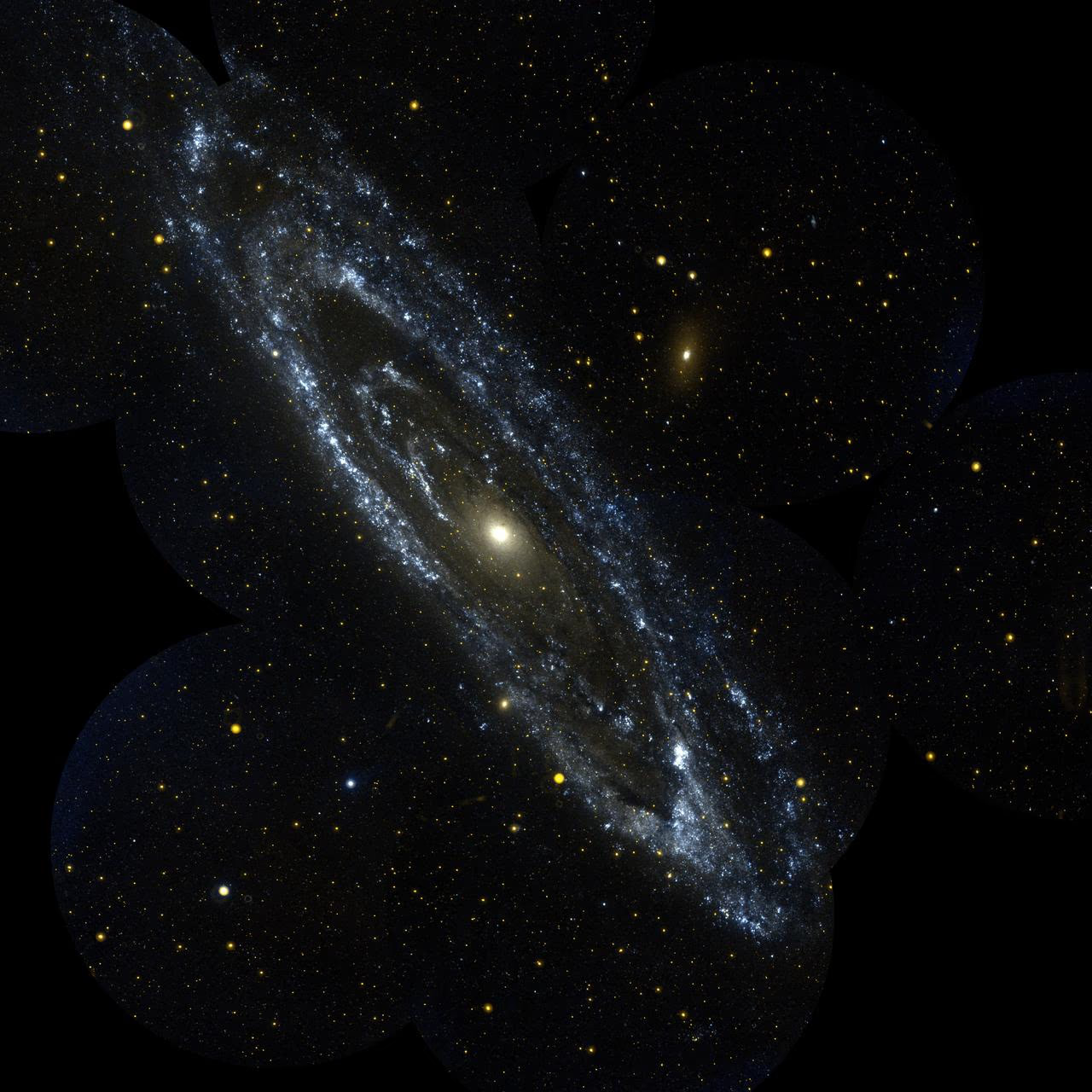
M31 · Galaxy
Andromeda Galaxy
Two and a half million years of light, gathered in a backyard.
Capture detailsColophon
Field notes
Andromeda is the test you go back to. The session that runs four hours and you remember as twenty minutes. I went out at nine, set the Origin tracking on a moonless night, and came back at one with a wide grin and a folder full of subs.
Two and a half million years of light, gathered in a backyard.
The thing about M31 at 335mm is that the whole galaxy fits, but only just. The dust lanes between NGC 206 and the bulge get sharp; the satellites M32 and M110 sit comfortably in the frame. With Origin doing live stacking on-mount, you watch the galaxy resolve faster than you can drink the coffee that was hot when you started.
Processing the dust lanes is the long pole. The Origin app’s auto-stretch is a beautiful cheat for daily use, but for a portfolio shot I take the master stack into PixInsight, apply a careful gradient correction (the Michigan suburbs are not, by anyone’s measure, dark), and then a few rounds of HDR multiscale transform to keep the bulge from blowing out. Final color balance happens in Photoshop because I trust my eyes more than any auto-color routine on the dust lanes’ subtle warm-cool gradient.
The thing nobody tells you about Andromeda is how much of the data is outside what you think of as “the galaxy”. Dim halo stars, a ghost of M110’s tidal stream, NGC 206 burning brighter than you’d expect — they all show up at four hours integration. At one hour, you get the famous postcard. At four, you get a place.
Placeholder imagery
NASA / JPL / Caltech (placeholder) · Owner's capture forthcoming.
Captured October 4, 2025 from Backyard Observatory, Michigan