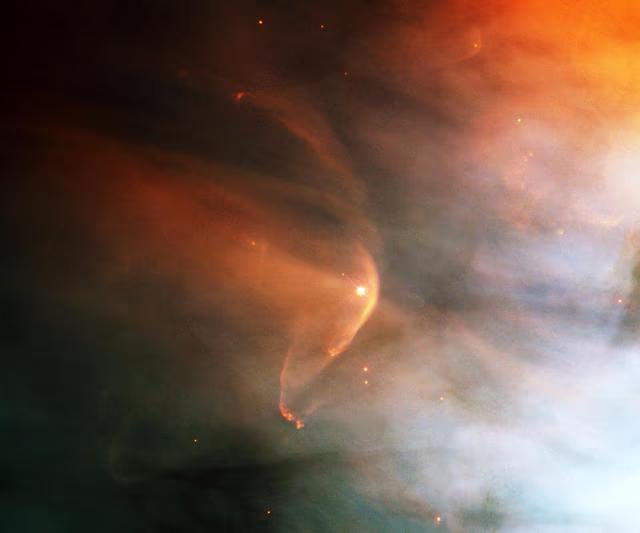
M42 · Nebula
Orion Nebula
The trapezium burns through every preset. It always wants more dynamic range.
Capture detailsColophon
Field notes
Every January I tell myself I won’t shoot M42 again. Every January, two weeks into the clear cold nights, I find myself pointing the Origin at it.
The trapezium is the problem. Four hot O-stars at the center of the brightest emission nebula in the northern sky — they will saturate any single exposure that captures the fainter outer wings of the nebula. So you do what every astrophotographer has done since the film days: shoot it twice. Or really, shoot it many times at many exposures, then composite.
The trapezium burns through every preset. It always wants more dynamic range.
The Origin’s defaults are tuned for the wider nebula — 10-second subs at gain 80, you let it stack until the sky-glow noise floor flattens. For M42 specifically, I run two sessions: one at default, one at 2-second subs at gain 50, just for the core. In PixInsight I combine them with the HDR composition tool, then a careful stretch that respects the gradient from the trapezium outward without crushing the pillars at the edges.
The session above ran 96 minutes total — modest by deep-sky standards, but you don’t need hours on the Orion Nebula. It’s that bright. What you need is patience to do the two-pass capture and the HDR processing afterwards. The sky was clear, the moon was new, and Michigan winters give you cold-but-stable seeing if you can stand the temperatures. I could not, after a while. The Origin can.
Placeholder imagery
NASA / Hubble Heritage Team STScI/AURA (placeholder) · Owner's capture forthcoming.
Captured January 18, 2026 from Backyard Observatory, Michigan