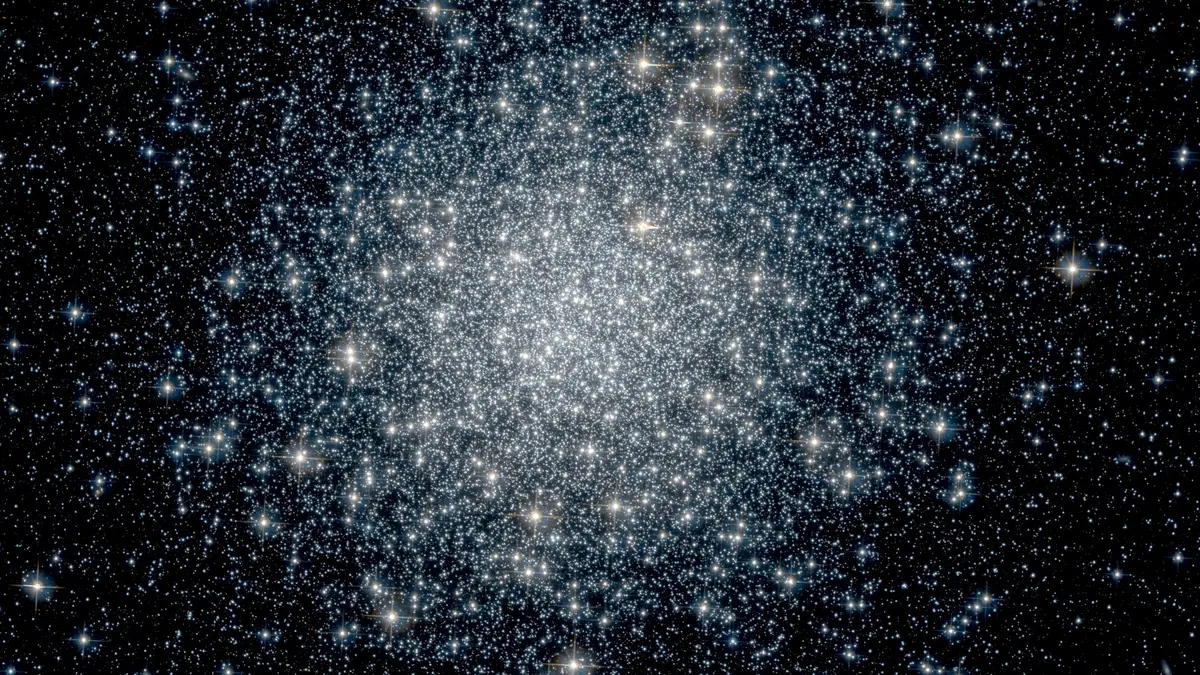
C87 · globular cluster
NGC 1261
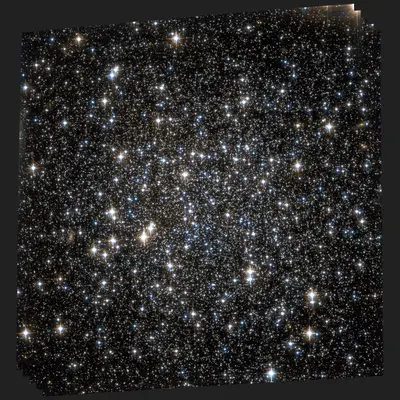
NGC 1261 is a globular cluster of stars in the southern constellation of Horologium, first discovered by Scottish astronomer James Dunlop in 1826.
Identity & coordinates
Identification
- Primary designation
- C87
- All designations
- C87 · NGC 1261
- Object type
- Globular Cluster
- Constellation
- Horologium
- Best viewing
- Winter
Coordinates & physical
- Right ascension (J2000)
- 03h 12m 16s
- Declination (J2000)
- −55° 12' 58"
- Apparent magnitude (V)
- —
- Distance
- —
Visibility tonight
The science
NGC 1261 is a globular cluster of stars in the southern constellation of Horologium, first discovered by Scottish astronomer James Dunlop in 1826. The cluster is located at a distance of 53 kilolight-years from the Sun, and 59 kilolight-years from the Galactic Center. It is about 10.24 billion years old with 341,000 times the mass of the Sun. The cluster does not display the normal indications of core collapse, but evidence suggests it may have instead passed through a post core-collapse bounce state within the past two billion years. The central luminosity density is 2.22 L☉·pc−3, which is low for a globular cluster. Despite this, it has a Shapley–Sawyer Concentration Class of II, indicating a dense central concentration.
Summary adapted from Wikipedia · CC-BY-SA-4.0
References
- SIMBAD Not resolved
- NED Fetched May 8, 2026 View in NED ↗
- Wikipedia Fetched May 8, 2026 Read full article ↗
Wikipedia title resolved via designation — fell back to an alternate catalog designation.
1 merge conflict resolved
- coordinates: SIMBAD missing → NED used