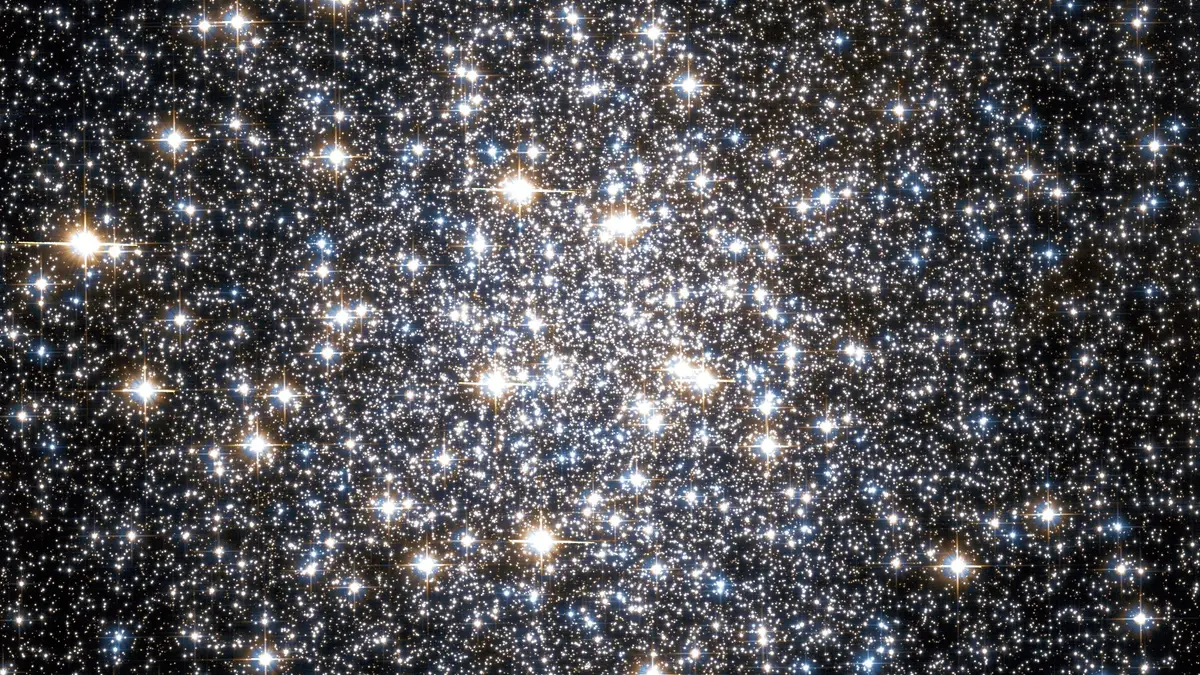
M10 · globular cluster
Messier 10
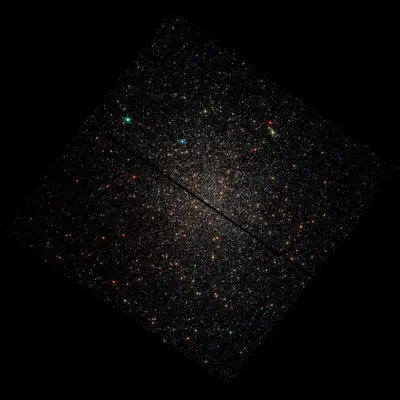
Messier 10 or M10 is a globular cluster of stars in the equatorial constellation of Ophiuchus.
Image: en:NASA , en:STScI , en:WikiSky. Public domain, via Wikimedia Commons.
Identity & coordinates
Identification
- Primary designation
- M10
- All designations
- M10 · NGC 6254
- Object type
- Globular Cluster
- Constellation
- Ophiuchus
- Best viewing
- Summer
Coordinates & physical
- Right ascension (J2000)
- 16h 57m 09s
- Declination (J2000)
- −04° 06' 01"
- Apparent magnitude (V)
- —
- Distance
- —
Visibility tonight
The science
Messier 10 or M10 is a globular cluster of stars in the equatorial constellation of Ophiuchus. The object was discovered by the French astronomer Charles Messier on May 29, 1764, who cataloged it as number 10 in his catalogue and described it as a "nebula without stars". In 1774, German astronomer Johann Elert Bode likewise called it a "nebulous patch without stars; very pale". Using larger instrumentation, German-born astronomer William Herschel was able to resolve the cluster into its individual members. He described it as a "beautiful cluster of extremely compressed stars". William Parsons, 3rd Earl of Rosse thought he could distinguish a dark lane through part of the cluster. The first to estimate the distance to the cluster was Harlow Shapley, although his derivation of 33,000 light years was much further than the modern value.
Summary adapted from Wikipedia · CC-BY-SA-4.0
References
- SIMBAD Not resolved
- NED Fetched May 8, 2026 View in NED ↗
- Wikipedia Fetched May 8, 2026 Read full article ↗
Wikipedia title resolved via designation — fell back to an alternate catalog designation.
1 merge conflict resolved
- coordinates: SIMBAD missing → NED used